










- Pest Insights
- 14 November 2025
Move-In Pest Proofing for New Dubai Homes
The cheapest pest control you'll ever buy is the proofing you do before the pests arrive. For a new Dubai home, handover week is the moment. Here's the checklist.
On this page
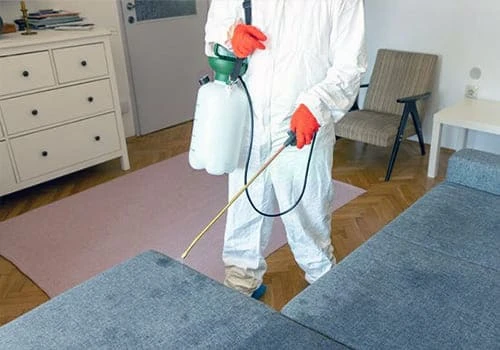
A brand-new home feels like the last place you’d worry about pests — no previous tenants, fresh paint, sealed packaging everywhere. But handover week is the single cheapest, easiest time to pest-proof a Dubai home: it’s empty, every surface is accessible, and you can seal entry points and treat the perimeter before furniture, food and the first cockroach arrive. Do it now and you may never need a reactive treatment. Skip it and you’ll pay more later, working around your sofa. Here’s the move-in checklist.
Why is a new home a pest risk at all?
It’s counterintuitive, so it gets overlooked. New properties carry their own specific pressures:
- Construction leaves gaps. Pipe and cable penetrations, AC line routes, expansion joints and unsealed service entries are exactly the routes pests use. A new build can have more open gaps than an older, settled home — see how this plays out on sites still under construction.
- The site was disturbed ground. Digging and landscaping displace whatever was living in the soil — ants, the occasional reptile or spider — and the new building is the nearest shelter.
- Empty homes attract rodents. A vacant villa between handover and move-in is quiet, undisturbed and ideal for a mouse or rat to settle, as our guide to signs of rats and mice explains.
- Neighbours and shared structure. In a new community, pests move along boundaries, shared walls and risers from wherever they were already established.
The good news: none of this needs chemicals to fix at the proofing stage. It mostly needs an inspection and a sealant gun.
The move-in proofing checklist
Walk the property before the movers come. Work room by room and don’t skip the boring spaces — utility rooms, the kitchen kickboard void and the garage are where problems start.
| Zone | What to check and seal |
|---|---|
| Kitchen & bathrooms | Gaps around pipes under sinks, behind the washing machine and dishwasher, at the back of base units; gaps around the WC and basin pipework |
| AC & services | The penetration where AC lines and cabling pass through external walls — a classic, frequently-open entry point |
| Doors & garage | Worn or missing brush seals under villa doors and the garage roller; gaps at the threshold |
| Windows & vents | Insect screens intact and fitted; mesh on extract vents and any open drain |
| Drains | Capped, sealed and fitted with covers — rats use drain lines |
| Exterior perimeter | Gaps in external render, weep holes, the boundary where landscaping meets the wall |
A few practical rules as you go:
- A mouse needs a gap the width of a pencil (around 6 mm); an insect needs far less. “It’s too small to matter” is usually wrong.
- Seal pipe gaps with the right materials — wire wool packed into the gap and sealed over, not just expanding foam, which rodents chew straight through.
- Don’t store cardboard from the move. Flattened boxes in the garage are nesting material and can carry hitchhiking pests. Recycle them quickly.
Villas vs apartments — does the approach differ?
Yes, because the pressure comes from different directions.
- Villas carry the heaviest load: a garden, boundary planting, outbuildings and ground-level access on all sides mean more entry routes and more soil-driven pests. A perimeter treatment and a termite check make most sense here — our villa pest control work is built around exactly this handover scenario.
- Apartments are more contained, but a new tower still has shared risers, service voids and a fresh-build crop of gaps. The focus shifts to your door seals, kitchen and bathroom penetrations, and balcony — including pigeon-proofing balconies and AC units before birds claim the ledge.
Newer Dubai communities sit on what was recently open or desert-edge land, so soil-driven pests are part of the picture early on. If you’re moving into a development like Dubai Hills Estate, a perimeter proof at handover is well worth it before the first ant trail or gecko appears.
Should I get a professional inspection at handover?
If it’s a villa or a ground-floor unit, it’s worth it — and the timing is ideal because the technician can see everything an empty home reveals. A move-in inspection typically covers:
- A full entry-point audit — every penetration, seal and gap, inside and out.
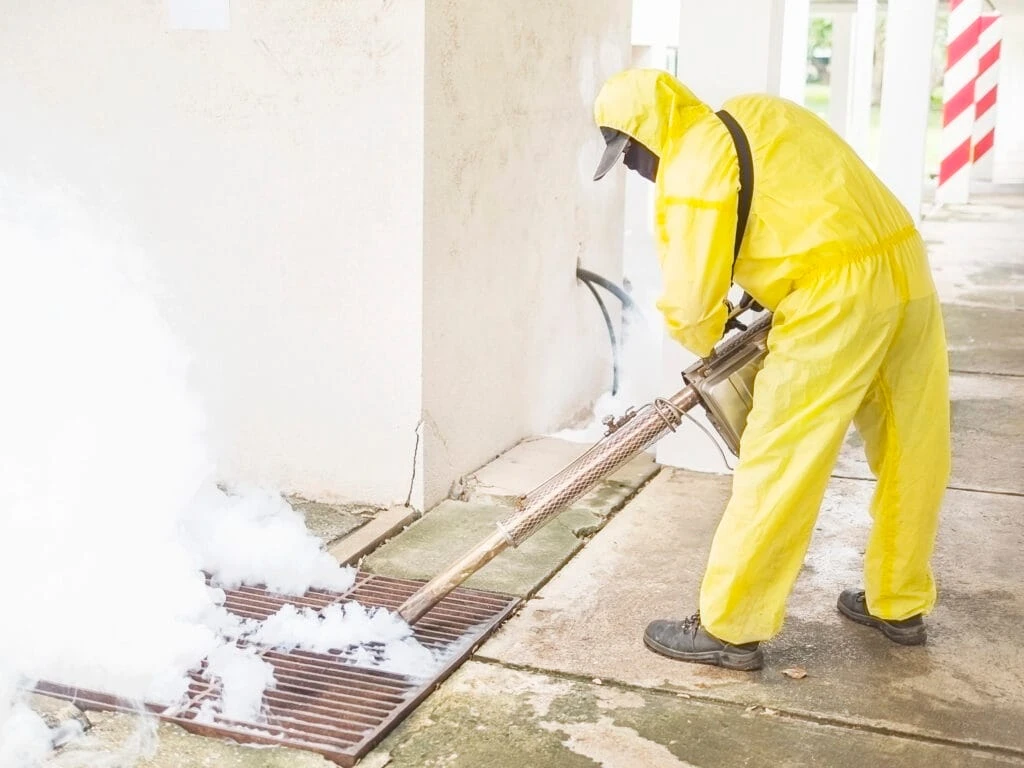
- A perimeter treatment to put a protective barrier around the building before pests establish.
- A termite check. New homes aren’t immune; a termite inspection runs AED 250–400 and is cheap insurance against a problem that’s far costlier once it’s in the structure — see the hidden termite problem in Dubai homes.
- A proofing report so you know what was sealed and what to watch.
This is also the natural moment to think about ongoing cover rather than one-off call-outs — an annual pest control contract keeps the perimeter maintained year-round, which matters most in the first year while the surrounding plots and landscaping are still settling.
Frequently asked questions
My home is brand new — surely it’s clean and pest-free? Clean, yes; sealed, often not. New builds frequently have open service penetrations and disturbed surrounding ground, which is precisely what pests exploit. Proofing at handover closes those routes before anything moves in — it’s prevention, not a reaction to a problem.
What does move-in proofing cost? It scales with property size, like any treatment: apartments generally run AED 150–400 and villas AED 400–800+, with a termite inspection AED 250–400 on top if you want one. Doing it while the home is empty is cheaper than reactive treatment later — see what pest control costs in Dubai for the full breakdown.
Is a perimeter treatment safe with kids and pets moving in? Yes — we use municipality-approved products and favour targeted, low-exposure application with clear re-entry guidance. For the full picture, read pet-safe and child-safe pest control.
Can’t I just do the sealing myself? You can do a lot of it — door seals, screens, tidying cardboard. The parts worth a professional are the perimeter treatment, the termite check, and spotting the entry points that aren’t obvious. A handover inspection catches what a DIY walk-through misses.
Proof it before you fill it
The best pest control is the treatment you never need because the pests never got in. Catch a new Dubai home at handover and you can seal, treat the perimeter and check for termites while it’s empty and accessible. PestMan is Dubai Municipality–approved and works to an IPM method across all seven emirates.
Related reading: What pest control costs in Dubai · Do you need an annual pest control contract? · Pigeon-proofing balconies & AC units in Dubai