




- Pest Insights
- 22 April 2025
Bees, Wasps & Hornets in the UAE: How to Tell Them Apart
Not everything that buzzes is a bee — and the difference decides whether it's relocated or removed. Here's how to identify bees, wasps and hornets in the UAE, safely.
On this page
Not everything that buzzes around a UAE villa is a bee — and the difference matters, because it decides whether the nest gets relocated or removed. Honey bees are protected pollinators and are relocated alive by a beekeeper; wasps and hornets are aggressive predators and are controlled. Either way, you should never tackle a nest yourself — a disturbed colony can deliver dozens of stings in seconds. The first job is simply telling them apart.
How do I tell a bee from a wasp or hornet?
You don’t need to be an entomologist — body shape, colour and behaviour give it away from a safe distance:
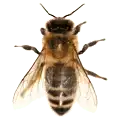
- Honey bee — golden-brown and fuzzy, with a rounded, hair-covered body. Calm and busy around flowers, not interested in you. A swarm hanging in a ball on a tree or wall is honey bees regrouping — dramatic, but usually docile.
- Carpenter bee — large, round and noisy, often with a shiny black, hairless abdomen. Bores neat round holes into untreated timber (pergolas, fascia boards, gates). Mostly solitary and slow to sting, but the boring damages wood.
- Paper wasp — slim, smooth and waisted, with a narrow “thread” between thorax and abdomen and long dangling legs in flight. Builds an open, umbrella-shaped honeycomb nest under eaves, in AC boxes and on balcony ceilings.
- Oriental hornet — large, reddish-brown with a distinctive broad yellow band across the abdomen. Builds bigger, more aggressive colonies; common across the UAE and capable of repeated, painful stings.
The quick rule: fuzzy and rounded = bee (likely relocated); smooth and waisted = wasp or hornet (controlled). When in doubt, photograph it from a distance and let a technician confirm.
Why are bees and wasps treated so differently?
Because one is an asset and the other is a threat. The response is built around that, not around fear of anything that flies.
| Honey bees | Wasps & hornets | |
|---|---|---|
| Role | Pollinators — ecologically valuable | Predators / scavengers |
| Temperament | Generally docile away from the hive | Defensive, can be aggressive |
| Sting | Once (stinger is left behind) | Repeatedly |
| Our approach | Humane live relocation by a beekeeper | Controlled removal of the nest |
| Why | Protecting pollinators; killing a colony is wasteful and unnecessary | Risk to people; relocation isn’t practical |
This is the humane bee policy we work to: a honey bee swarm or hive is collected and rehomed wherever it’s safely possible, not exterminated. Our bee, wasp and hornet service covers both routes — relocation for bees, controlled removal for wasps and hornets.
Why should you never DIY a bees’ or wasps’ nest?
This is the part people underestimate, and it’s where the injuries happen. A nest is a colony with a defence response, and disturbing it triggers all of them at once.
- Mass stinging. Hornets and paper wasps don’t sting once and leave — they swarm a perceived threat and sting repeatedly. A spray can or a broom is exactly the provocation that sets that off.
- Allergic reactions. A small number of people have severe, fast allergic reactions to stings. With a nest’s worth of venom that’s a genuine medical emergency, not a sore arm.
- Falls. Most nests are up high — eaves, balconies, villa rooflines. People get stung on a ladder and fall, which is often the worse injury.
- Bee swarms collapse, not die. A water-spray or shop aerosol on a honey bee swarm tends to scatter and anger them without removing the colony — and you’ve now killed pollinators for nothing. A beekeeper relocates them intact.
- Hidden nests. Wasps and hornets nest inside wall voids, AC units and roof spaces. What you see is a fraction of what’s there, and poking the entry just sends them out.
The safe move is always the same: keep your distance, keep children and pets away from the area, don’t seal the entry hole (trapped insects find another way out — often inside), and call a professional.
Where do nests turn up in UAE homes?
Knowing the hotspots helps you spot a nest early, while it’s small and easy to deal with:
- Under eaves, soffits and balcony ceilings — classic paper-wasp real estate.
- Inside AC outdoor units and electrical boxes — warm, sheltered, and easy to disturb by accident.
- Wall cavities and weep holes — bees and hornets exploit any gap into a void.
- Untreated timber — pergolas, gates and fascia for carpenter bees.
- Garden sheds, storage and unused BBQ covers — undisturbed corners.
Activity climbs through spring and peaks in the long heat, when colonies are largest and most defensive — the wider pattern is in our summer pest surge guide. Catching a nest in spring, when it’s the size of a golf ball, is far easier than in August when it’s the size of a football.
Frequently asked questions
Is it a bee or a wasp on my balcony? Look at the body. Fuzzy, golden-brown and rounded is a bee; slim, smooth and “waisted” with dangling legs in flight is a wasp. Reddish-brown with a bold yellow band is likely an oriental hornet. Photograph it from a distance and a technician can confirm.
Will you kill a honey bee hive? No, wherever it can be done safely. Honey bees are valuable pollinators and we relocate swarms and hives live through a beekeeper under a humane policy. Wasps and hornets are controlled because relocation isn’t practical and the sting risk is higher.
Can I just spray a wasp nest myself? Strongly advised against. A disturbed nest swarms and stings repeatedly, the colony is usually larger than the visible part, and people get stung falling off ladders. Keep clear and let a professional handle it.
How much does bee or wasp removal cost? It depends on the species, nest size and how accessible it is — a balcony paper-wasp nest is different from a hive inside a wall void. See what pest control costs in Dubai for how jobs are priced.
Got something buzzing? Let’s identify it safely
Whether it’s a honey bee swarm to relocate or a hornet nest to remove, the safe first step is to keep clear and let a professional handle it. Send us a photo from a distance and we’ll confirm the species and the right response.
Related reading: Snakes & scorpions in desert-edge villas · The summer pest surge in Dubai · What pest control costs in Dubai