





- Pest Insights
- 20 May 2025
Camel Spiders & Brown Widows: What's Actually Dangerous in the UAE
Camel spiders look terrifying but aren't venomous — and aren't even spiders. The brown widow is the one that actually matters. Here's the truth, myth by myth.
On this page
The scary one is harmless and the harmless-looking one is the real concern. Camel spiders — the fast, sand-coloured creatures with huge jaws that go viral every summer — are not venomous, do not chase people, and aren’t even true spiders. The genuine medical concern in UAE homes is much smaller and far less dramatic: the brown widow. If you’ve been worrying about the wrong one, this guide sets the record straight, myth by myth, and tells you what to actually do about each.
Camel spiders: the myths, busted
Few desert creatures attract as much misinformation as the camel spider (a solifuge, technically — an order all its own, neither spider nor scorpion). Let’s clear the big ones:
- Myth: “Camel spiders are venomous.” They are not. Camel spiders have no venom glands and no venom delivery system. A bite can pinch and break skin because the jaws are genuinely powerful, but there is no toxin involved.
- Myth: “They chase people across the desert.” They don’t. What looks like chasing is the animal running to stay in your shadow — they seek shade, and a moving person casts moving shade. They’re fleeing the sun, not hunting you.
- Myth: “They jump and they’re as big as a dinner plate.” No. Forced-perspective photos held close to the camera created that legend. They’re fast on the ground but they don’t leap, and they’re a fraction of the size the photos suggest.
- Myth: “Their bite is necrotic / will rot your flesh.” No documented venom means no venom-driven tissue death. As with any animal bite, the real risk is ordinary wound infection if it isn’t cleaned.
The honest summary: a camel spider is unsettling to look at and can deliver a painful nip if you corner it with bare hands, but it is not a venomous threat. Don’t handle it, don’t panic.
So which UAE spider should you worry about?
The one that earns genuine caution is the brown widow (Latrodectus geometricus) — a relative of the black widow that has settled comfortably into Gulf gardens, villa compounds and the undersides of outdoor furniture. It’s small, easy to overlook, and its venom is medically significant. This is the species behind most real spider-bite concern in the region, and the reason “spider control” in the UAE is mostly about widows, not the dramatic desert creatures.
Brown widows favour quiet, sheltered, undisturbed spots: under garden chairs and tables, in plant pots and BBQ covers, inside meter boxes and gate housings, and in the corners of garages and storerooms. That makes them common across leafy, low-rise communities — the kind of villa-and-garden setting you’ll find in areas like Mirdif.
How do you identify a brown widow?
You identify a brown widow by two features together — not one:
| Feature | What to look for |
|---|---|
| The hourglass mark | An orange-to-yellow hourglass on the underside of the abdomen (a black widow’s is usually deeper red) |
| The egg sac | A distinctive spiky / tufted, spherical egg sac — covered in silk projections, not smooth. This is the single most reliable giveaway |
| Body colour | Tan to mottled brown, often with a faint patterned back; legs may show banding |
| The web | A messy, irregular tangle (a cobweb), not a neat wheel-shaped orb |
That spiky egg sac is the clincher — if you see a small, fuzzy, spiked silk ball tucked under furniture or in a pot, treat the area as a brown-widow site even before you spot the adult.
What should you do about each one?
The right response is different for each:
- Camel spider indoors or in the garden: It wandered in seeking shade and isn’t a venom risk. Don’t pick it up with bare hands — guide it out with a container and card, or let it move on. If they’re turning up repeatedly, it points to easy entry routes worth sealing.
- Brown widow anywhere you live or relax: Treat it as the real concern. Don’t crush egg sacs (you can scatter spiderlings) and don’t reach blindly under furniture. Keep children and pets clear, and have the area professionally treated.
- Either, after rain: Both tend to move and become more visible after wet weather pushes them out of waterlogged ground cover — see why in our post-rain pests guide.
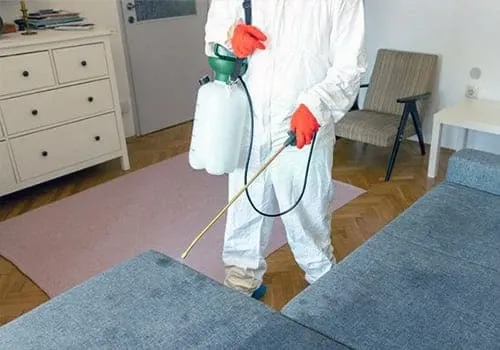
For brown widows in particular, professional spider control does what a single can of spray won’t: it treats the harbourage zones, removes accessible egg sacs, and applies a residual barrier around the perimeter so new ones don’t move straight back in.
Frequently asked questions
Are camel spiders dangerous? Not in the venomous sense — they have no venom. A bite can hurt and break skin because of the strong jaws, and like any wound it should be cleaned to prevent infection, but there is no toxin. They’re far less of a concern than their reputation suggests.
Is the brown widow as dangerous as the black widow? Its venom is medically significant but a brown widow bite is generally considered less severe than a black widow’s, often staying localised. It’s still the spider to take seriously in the UAE — keep children and pets away and seek medical advice if someone is bitten and develops more than mild local symptoms.
How do I tell a brown widow from a harmless house spider? Look for the orange hourglass on the underside and the spiky, tufted egg sac. Harmless house spiders don’t have either. If you’re unsure, photograph it from a safe distance — a clear image makes identification easy.
How do I choose a company to deal with widows safely? Pick a licensed operator that treats harbourage and egg sacs, not just sprays the floor, and uses products safe around kids and pets. Our checklist on how to choose a pest control company in Dubai covers what to ask.
Deal with the real threat, not the scary one
Camel spiders make headlines; brown widows make the genuine medical case for spider control. We identify and treat both correctly across all seven emirates — targeting harbourage and egg sacs, with products safe for kids and pets, backed by a warranty.
Related reading: Snakes & scorpions on the desert edge · How to choose a pest control company in Dubai · The pests that surge after UAE rain