

- Pest Insights
- 18 November 2026
Mosquito Season in the UAE: What to Do This Week
A year of mosquito trapping in Dubai caught the fewest mosquitoes in the summer months, and every rain shower adds new breeding water. Here's what that survey found, where mosquitoes breed around UAE homes, and the five things to do before the bites start.
Dubai Municipality-approved pest control, licensed since 2016.
On this page
If the evenings on your balcony or in your garden suddenly come with bites again, you’re not imagining it. A year of mosquito trapping across Dubai, run with Dubai Municipality from June 2024 to June 2025, caught the fewest mosquitoes in the summer months, and rain adds fresh breeding water at any time of year. The most effective thing you can do this week is find and empty the small pockets of still water around your home, because that’s where the next generation grows.
Rain makes a big difference. After the rainstorm at the end of April 2024, Dubai Municipality treated more than 75,000 drainage outlets and 102 water collection sites against mosquito larvae, and asked residents to clear standing water and to watch for leaks from taps, air conditioners and fridges.
What makes mosquito numbers rise?
Mosquitoes need standing water: their larvae and pupae live in it. The Dubai survey doesn’t say why fewer were caught in summer, and its authors say seasonality still needs more study. Rain, when it comes, fills every container, drain and blocked gutter at once, and the researchers link heavy rain and standing water in Gulf countries to more mosquitoes. Water from taps, air conditioners and plant pots keeps some breeding sites going even in dry months.
An egg takes 7 to 10 days to become an adult mosquito. So a bucket of rainwater left on a roof today can mean bites in a week or two.
Where do mosquitoes breed around a UAE home?
Most of the water is small and easy to miss. Check these first:
- AC condensate trays and drip pipes. Dubai Municipality specifically asks residents to watch for water leaking from air conditioners.
- Plant pot saucers and vases. A thin layer of water is enough.
- Irrigation boxes and valve chambers in villa gardens, often with a cracked lid.
- Blocked gutters and roof drains, especially after rain.
- Buckets, barrels, cool boxes, tyres, kids’ toys and pet bowls left outside.
- Unused toilets and floor drains in maid’s rooms, guest bathrooms and empty flats.
- Fountains, ponds and pools that are switched off or rarely cleaned.
The mosquito that spreads dengue, Aedes aegypti, was found throughout Dubai in that survey, and it doesn’t fly far: only a few blocks in its lifetime. It lays its eggs on the inside walls of containers just above the water, and the eggs can survive drying out for months. So for this mosquito, the water that matters is usually close by, and a container you tip out should also be scrubbed or stored dry.
Five things to do this week
- Walk around once and tip out every container. Saucers, buckets, toys, bowls. Turn over anything that can collect water, and scrub the ones you keep.
- Check every AC drip point. Make sure trays drain freely and the pipe doesn’t end in a puddle or a pot.
- Flush unused drains and toilets weekly, or keep them covered.
- Clear gutters and roof drains, and check again after any rain.
- Fit or repair screens on windows and balcony doors you leave open.
These steps cost little or nothing, and they’re the first things health authorities recommend. In villas with gardens, irrigation and water features, there’s often more water than you can find or remove alone.
When should you call pest control?
Call a professional when:
- You’ve cleared the obvious water and are still being bitten every evening.
- You have a garden, irrigation, a pool area or water features you can’t drain.
- There’s still water you can’t reach, such as drain chambers, roof tanks or a neighbour’s plot.
- Someone in the home reacts badly to bites, or you have babies who sleep near open doors.
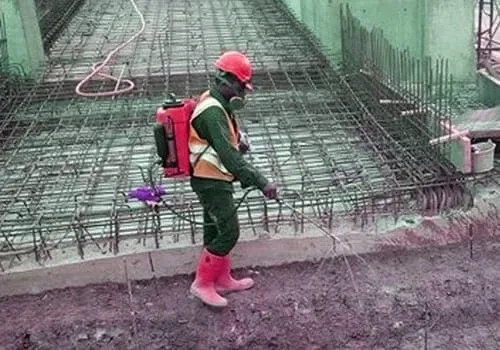
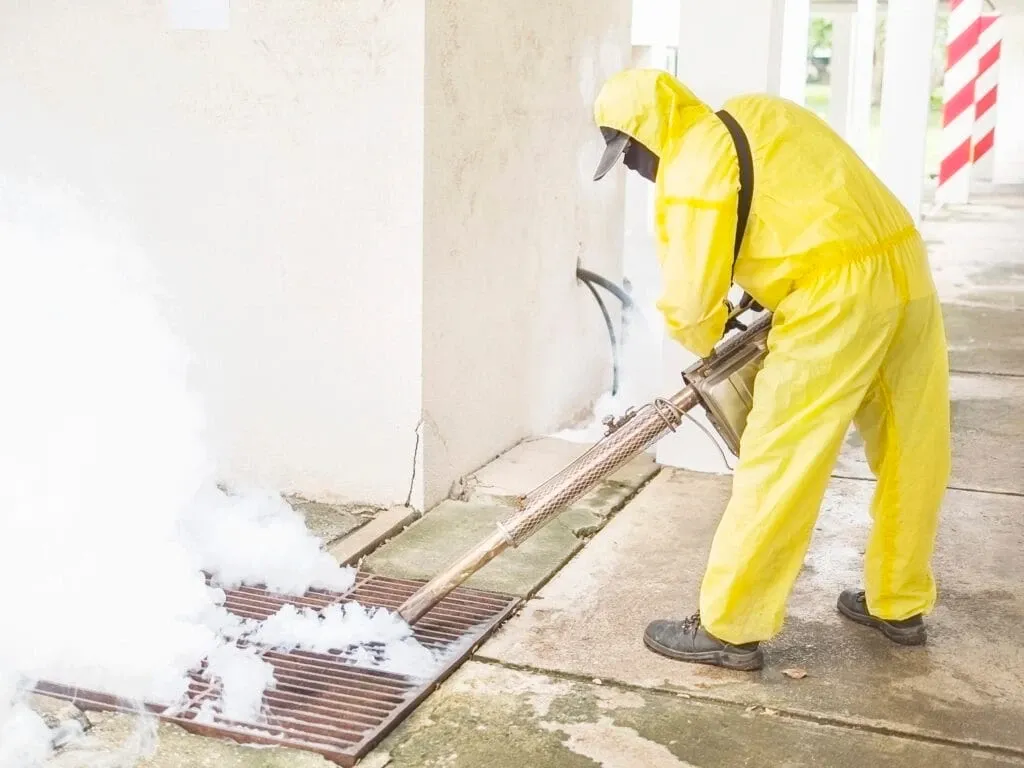
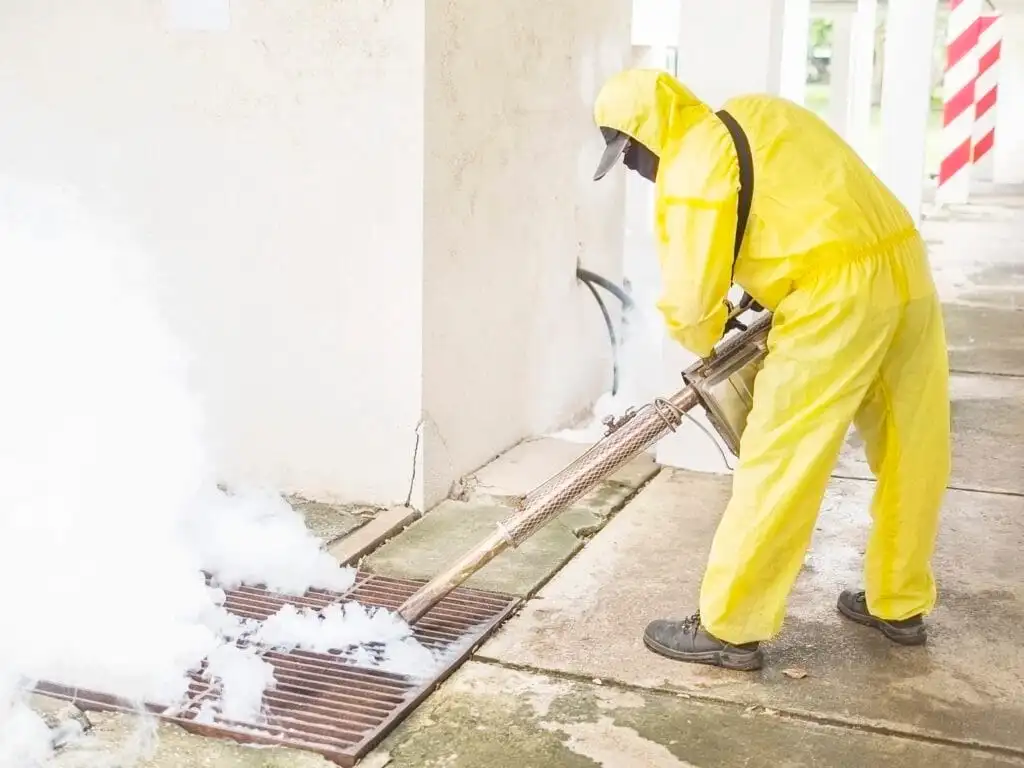
Good mosquito control works in the order the US Environmental Protection Agency recommends: find and remove breeding water first, keep mosquitoes out with screens, treat the water that can’t be removed with a larvicide, which kills the larvae before they become adults, and, when needed, use adult control such as fogging to knock down the mosquitoes flying now. Fogging only kills the mosquitoes in the air at the time; removing or treating the water is what stops the next wave. Our guide to garden mosquitoes in Dubai goes deeper on villas.
Every garden is different, so we price each job once we know the plot: send us your area and the size of the garden for a free quote.
Are UAE mosquitoes dangerous?
Most bites are just itchy. But Aedes aegypti is the main mosquito that spreads dengue, and the World Health Organization’s advice for households is to empty, cover and clean water containers every week, remove anything that holds water, and use window screens, covering clothes and repellents. If you or your family feel unwell after bites, see a doctor; pest control isn’t a substitute for medical advice.
Frequently asked questions
When does mosquito season end in the UAE? In the Dubai survey, the fewest mosquitoes were caught in the summer months. Rain can bring a new wave at any time of year, and gardens with irrigation can have mosquitoes all year.
Do repellents work? The World Health Organization recommends repellents containing DEET, picaridin or IR3535, along with screens and covering clothes; use them as the label says. Gadgets are another matter; see our look at ultrasonic pest repellents.
Is fogging safe for children and pets? Ask before the treatment how long children and pets should stay away. It depends on the product, and the team should tell you before they start.
How often should a villa garden be treated? That depends on how much of the breeding water can be removed for good. Water that keeps coming back, such as irrigation boxes and water features, needs regular checks, especially after rain.
Get ahead of the bites
The best time to deal with mosquitoes is before the first bad week. Send us your area and whether it’s an apartment or a villa, and we’ll tell you what we’d treat and the price.
Related reading: Why your Dubai garden is full of mosquitoes · Pests after rain in the UAE · Mosquitoes in apartments: AC trays, drains and balconies
Sources
- Detection of Dengue Virus in Aedes aegypti Mosquitoes, Dubai, United Arab Emirates (opens in a new tab) — Emerging Infectious Diseases (US Centers for Disease Control and Prevention)
- Dubai Municipality initiates comprehensive pest control strategies following adverse weather conditions in Dubai (opens in a new tab) — Government of Dubai Media Office
- Life Cycle of Aedes Mosquitoes (opens in a new tab) — US Centers for Disease Control and Prevention
- Success in Mosquito Control: An Integrated Approach (opens in a new tab) — US Environmental Protection Agency
- Dengue (fact sheet) (opens in a new tab) — World Health Organization