




- Pest Insights
- 19 August 2024
Why Your Dubai Garden Has Mosquitoes — and How to Take It Back
Mosquitoes don't travel far — if your Dubai garden has them, they're breeding within a few metres of where you're bitten. Here's how to find and kill the source, not just the swarm.
On this page
If your Dubai garden is full of mosquitoes at dusk, the cause is almost certainly closer than you think. Mosquitoes are weak fliers that rarely travel more than a hundred metres or so from where they hatched — so if they’re biting you on your own terrace, they’re breeding in standing water within a few metres of it. Find and remove that water and you cut the problem off at the source; reach only for the spray and you’re swatting this generation while the next one develops in a puddle you haven’t found.
Why does my garden have mosquitoes at all?
Every mosquito starts life in water. A female lays her eggs on or beside standing water, the larvae develop there, and in Dubai’s warmth that whole cycle can complete in about a week to ten days. No standing water means no breeding — which is the entire basis of effective mosquito control.
Crucially, it takes almost nothing. A bottle cap of water is enough for a few larvae; a forgotten bucket is a nursery. So the question isn’t “where are the mosquitoes coming from” — it’s “where is the water near my garden.” Pressure peaks during the hot, humid months as part of the wider summer pest surge in Dubai, and any rain leaves fresh pools that drive a noticeable spike a week or two later, which is why mosquitoes feature heavily among post-rain pests in the UAE.
Where is the standing water hiding?
This is the part most people miss, because the breeding sites are small and ordinary. Walk your garden and check every one of these:
- Plant pot saucers and trays. The number-one culprit in UAE gardens — water collects under every pot after irrigation.
- AC condensate trays and drip points. Split-unit drainage and the tray under window units hold water constantly in summer.
- Water features and fountains that aren’t moving or circulating — still decorative water is ideal breeding habitat.
- Blocked or slow drains and gully traps, where water sits instead of draining away.
- Buckets, watering cans, toys, bin lids, tarpaulins and any upturned object that catches and holds rain or hose water.
- Clogged gutters and roof drainage, and the saucers of large planters on balconies and terraces.
- Pet water bowls and bird baths left standing for days.
Found-and-tipped beats sprayed-and-hoped every time. The single most effective thing you can do this week is empty these out — and keep emptying them, because the water comes back.
Tip it, dry it, or treat it: the source-first checklist
You won’t always be able to remove the water (a pool, a permanent water feature, a drain). The rule is to eliminate what you can and treat what you can’t:
- Tip and store. Empty saucers, buckets and cans; turn them upside down or bring them in so they can’t refill.
- Refresh weekly. Change pet bowls and bird baths every couple of days — faster than larvae can develop.
- Keep water moving. Run fountain pumps continuously, or drain features you’re not using. Mosquitoes need still water.
- Clear the drains. Unblock gully traps and gutters so water flows away instead of pooling.
- Treat what you can’t drain. Permanent water (ornamental ponds, certain drains) can be dosed with a targeted larvicide that stops larvae maturing without harming the wider garden.
- Mind the irrigation. Over-watering that leaves standing pools in plant beds quietly feeds the cycle — water enough, not more.
When is fogging actually worth it?
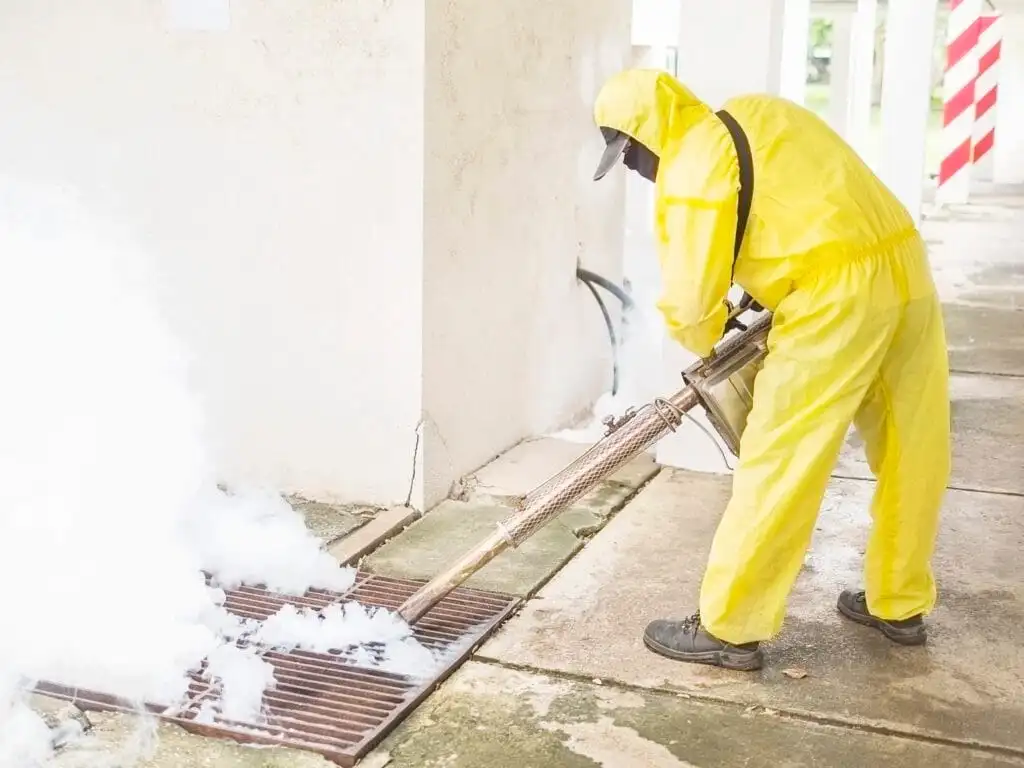
Fogging is the part everyone pictures — and it works, but only in its proper place. Fogging knocks down the adult mosquitoes flying now; it does nothing about the larvae in the water, so on its own it buys you a quiet evening and little more. Used correctly, it’s the fast-relief half of a two-part job: remove the breeding sites (the lasting fix) and fog to clear the existing swarm.
Professional mosquito control puts these together — a breeding-site survey of the whole plot, larvicide for the water that can’t be drained, and a timed fog or residual treatment of the planting and shaded resting spots where adults shelter during the day. Because mosquitoes are constantly re-introduced from surrounding water, mosquito and reptile work carries a shorter warranty window than general treatments, which is why a one-off blast is rarely the end of it.
Garden size and layout drive the approach. A compact courtyard is straightforward; a large villa garden with a pool, water feature and dense planting has many more potential sites and resting spots to cover. Waterfront and heavily landscaped communities feel it most — homes on Palm Jumeirah, for instance, combine lush irrigation, water features and humidity, so source reduction there matters even more than the fog.
How do I keep them away after treatment?
Treatment resets the count; these habits keep it low:
- Walk the “tip-and-empty” round weekly — it’s the highest-impact thing you’ll do.
- Cut back dense, shaded planting near seating; adults rest in cool foliage during the day.
- Fit or repair insect screens on doors and windows so the garden’s mosquitoes don’t follow you indoors.
- Time outdoor evenings with the knowledge that biting peaks at dawn and dusk — and keep the breeding sites empty so there are fewer to bite.
Standing water is also the link between several garden pests; the same damp, shaded conditions that breed mosquitoes suit the ticks and fleas that ride in on pets in UAE villas, so a tidy, well-drained garden pays off twice.
Frequently asked questions
Why do mosquitoes keep coming back after I fog the garden? Because fogging only kills the adults that are flying at that moment. If the standing water is still there, a fresh generation hatches within a week or so. Lasting control needs the breeding sites removed or treated — fogging alone is a temporary reset.
My neighbour has a pool and a water feature — are their mosquitoes my problem? They can be, since mosquitoes drift in from nearby. But you’ll get the biggest gain from clearing the small breeding sites on your own plot first — pot saucers, AC trays, buckets. A properly maintained pool with moving, treated water actually breeds very few; it’s the still, neglected water that’s the issue.
Are mosquito treatments safe around children and pets? Yes. The products are applied to planting and resting areas and to water as a targeted larvicide, and are safe for households with kids and pets when used correctly — the same standard as our other pet-safe and child-safe treatments.
How long does garden mosquito treatment last? Expect meaningful relief for a number of weeks, but because mosquitoes are continually re-introduced from surrounding water and any new rain, gardens with ongoing pressure do best on a recurring schedule rather than a single visit. Keeping breeding sites empty between visits is what stretches the result.
Take your evenings back
The fog clears tonight’s swarm — removing the water is what stops the next one. We survey your whole plot for breeding sites, treat the water you can’t drain, and clear the adults so the garden is usable again.
Related reading: The summer pest surge in Dubai · Ticks and fleas on pets in UAE villas · What pest control actually costs in Dubai