

- Pest Insights
- 18 May 2026
Pest Control for Dubai Clinics & Healthcare Facilities (DHA/DOH)
A clinic, pharmacy or hospital in the UAE must run a documented, low-toxicity pest control programme — it's an infection-control and licensing requirement, not an optional extra. Here's what a compliant, audit-ready service looks like.
On this page
For any healthcare facility in the UAE, pests aren’t just a nuisance — they’re a documented infection-control risk and a licensing liability. A clinic, pharmacy, lab or hospital in the UAE is expected to run a scheduled, documented pest control programme with a licensed provider, using low-toxicity IPM (Integrated Pest Management) in patient and clinical areas — bait and monitoring, not spraying. When an inspector arrives, they want to see a live programme and a current logbook, not a clean floor on the day. This guide covers why it’s required, what compliant service looks like, and the paperwork that survives an audit.
Why healthcare facilities must have documented pest control
Pest control in a hospital or clinic sits inside your infection-prevention and control (IPC) framework — the same framework that governs sterilisation, waste and hand hygiene. It is checked as part of facility licensing and accreditation:
- In Dubai, the Dubai Health Authority (DHA) licenses and inspects clinical facilities, alongside Dubai Municipality for the environmental-health side.
- In Abu Dhabi, the Department of Health (DOH) plays the same role, with the municipality.
- Many facilities also carry JCI or other accreditation, which expects a documented, trend-tracked pest programme.
The logic is simple: cockroaches, rodents and flies are mechanical vectors — they move across drains, waste and sterile zones and carry organisms with them. A pharmacy or lab adds stored-product pests to the list. An undocumented, reactive “call someone when we see a roach” approach fails on two counts at once: it’s an infection risk, and there’s no evidence trail for the auditor.
What a compliant healthcare pest programme looks like
Compliant healthcare pest control is quieter and more disciplined than a standard commercial job. The priority is patient safety, so the method changes by zone:
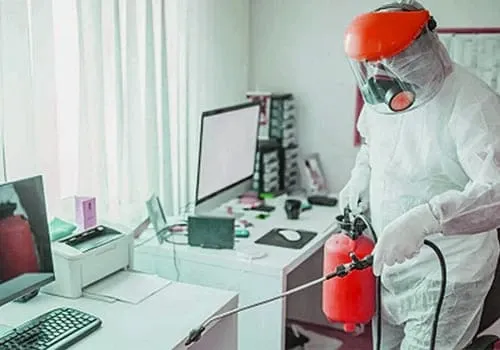
- Low-toxicity IPM in clinical and patient areas — sealed cockroach gel bait and monitoring stations, never open spraying near patients, wards, or sterile supplies.
- Sealed, tamper-resistant, numbered bait stations — mapped on a site plan and checked every visit, inside and out.
- Sensitive-area and after-hours scheduling — treatment around clinic hours, quiet zones, day-surgery lists and pharmacy operations so care is never disrupted.
- Root-cause focus — drains, waste holding, loading bays and door gaps sealed and corrected, not just the visible pest.
- Rapid response between visits — our team typically responds in around 30 minutes for an urgent sighting, which matters when a single roach in a treatment room can pause a service.
This is exactly the child-safe, low-toxicity philosophy we apply in the most sensitive settings — see pet-safe & child-safe pest control. All products are Municipality-approved, and clinical zones lean on bait, exclusion and monitoring rather than chemical application.
The by-zone approach
Different parts of a healthcare site carry different rules. A good provider treats them differently:
| Zone | Primary method | Notes |
|---|---|---|
| Wards, patient & clinical rooms | Monitoring + sealed gel bait | No spraying; low-toxicity only, after-hours |
| Pharmacy & drug store | Sealed bait + stored-product monitoring | HACCP-style discipline; protect stock integrity |
| Lab & sterile supply | Exclusion + monitoring stations | Proofing and traps over any chemical |
| Kitchen / cafeteria | HACCP-aligned, like restaurants | Gel bait, UV fly units, drain treatment |
| Waste holding & loading bays | External rodent station grid | Numbered, mapped, door-gap proofing |
The audit logbook you must keep
This is where most facilities lose marks. Keep one current, on-site file the inspector can open on request:
- The service contract and the provider’s licence
- A signed service record for each visit — date, zones, findings, products and batch numbers
- The bait-station map with numbered stations, inside and out
- Trend reports — catch counts and sightings over time, so you can prove the programme is working (or show what you corrected)
- Product certificates and safety data sheets for anything used on site
- A corrective-action log — what was found, what was done, and the result
Because this discipline needs to be continuous, healthcare sites almost always run an annual contract (AMC) with scheduled visits rather than one-off call-outs — the contract is what keeps the file current for your next inspection.
The pests that matter most in healthcare
- Cockroaches — the headline infection-control risk; baited in voids, never sprayed in clinical zones.
- Pharaoh ants — a known hospital problem: tiny, they trail into sterile supplies and dressings and are treated only by targeted baiting (spraying makes a colony split and spread).
- Rodents — droppings, gnaw marks and contamination; controlled with a mapped, tamper-resistant station grid plus proofing.
- Flies — drain and filth flies from waste holding; UV units and drain treatment, not aerosols.
- Stored-product pests — weevils and moths in pharmacy and dry-store stock; monitored and excluded.
Frequently asked questions
Is pest control a DHA/DOH requirement for clinics? In practice, yes. Pest control falls under your infection-prevention and environmental-health obligations, which DHA (Dubai) and DOH (Abu Dhabi), alongside the municipality, check at licensing and inspection. You’re expected to hold a documented programme with a licensed provider.
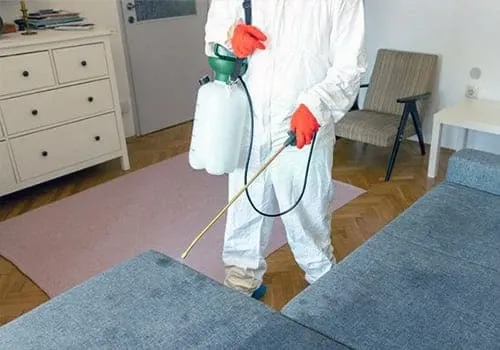
Do you spray inside a clinic or patient area? No. Clinical and patient zones use low-toxicity IPM — sealed bait, exclusion and monitoring — never open spraying near patients or sterile supplies. Any application is confined to appropriate back-of-house zones, after hours.
Can you work around our clinic hours? Yes. Healthcare services are scheduled around your operating hours, quiet zones and day-surgery lists, typically after-hours, with rapid on-call response (around 30 minutes) for urgent sightings between visits.
What do we show an inspector? The current contract and provider licence, signed service records with batch numbers, the numbered bait-station map, trend reports, and a corrective-action log. A good provider keeps this file audit-ready for you.
How often should a clinic be serviced? Most healthcare facilities run scheduled monthly service under an annual contract, with on-call response between visits — frequency scales with the size and risk profile of the site.
Keep your facility inspection-ready
Healthcare pest control is about discipline and documentation as much as the treatment itself: low-toxicity IPM in clinical areas, sealed and monitored stations, sensitive scheduling, and a logbook that’s always ready for DHA, DOH or the municipality. We run documented, audit-ready programmes for clinics and hospitals across all seven emirates — and keep the inspection file current for you. Call our team on +971 56 540 7666 to review your site.
Related reading: Clinics & hospitals sector · Pet-safe & child-safe pest control · Restaurant HACCP compliance guide · Do you need an annual contract (AMC)?