

- Pest Insights
- 1 June 2026
How to Tell If You Have Bed Bugs (Signs, Bites & Checks)
Itchy bites in rows overnight, tiny ink-dot stains on the mattress seam, or a live reddish-brown bug near the headboard — here's how to be sure it's bed bugs and how to inspect your own bed step by step.
On this page
Not sure whether you have bed bugs? The three signs that settle it are: bites in a line or cluster that appear overnight, tiny dark “ink-dot” spots (droppings) and small blood smears along the mattress seam, and a live flat, apple-seed-sized reddish-brown bug in the seams, headboard or bed frame. One sign on its own can be something else — but two or three together means you almost certainly have bed bugs, and it’s time to inspect properly.
The signs of bed bugs, in order of certainty
Some clues are stronger than others. Bites alone fool a lot of people, because plenty of things bite at night. The physical evidence on the bed is what confirms it.
- Bites in rows or tight clusters on skin exposed while you sleep — arms, shoulders, neck, ankles. Often itchy and noticed in the morning.
- Dark ink-dot staining — pin-sized black or brown specks (digested blood) along mattress piping, seams and the joints of the bed frame. Smears if you rub it with a damp tissue.
- Small rust-coloured blood spots on the sheet, from a bug crushed while you moved in your sleep.
- Shed skins and pale eggs — translucent, empty shells the bugs leave as they grow, plus rice-grain-sized whitish eggs tucked into seams.
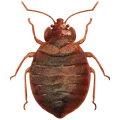
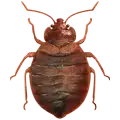
- Live bugs — flat, oval, reddish-brown, roughly 4–5 mm (apple-seed size). Hiding in seams, behind the headboard, in the box spring, or behind loose skirting and wallpaper.
- A sweet, musty smell — only in heavier, established infestations.
The more of these you find in the same area, the more certain it is. A single itchy bite with no staining and no bug is not enough to diagnose bed bugs.
Bed bug bites vs mosquito & flea bites
Bites are the reason most people start looking, but the pattern tells you a lot. Use this to narrow it down — then confirm with a bed inspection, because bites alone are never proof.
| Feature | Bed bugs | Mosquitoes | Fleas |
|---|---|---|---|
| Pattern | Rows or clusters (“breakfast, lunch, dinner”) | Random, scattered | Clusters, mostly ankles/lower legs |
| Where on body | Exposed skin during sleep — arms, shoulders, neck | Any exposed skin, day or night | Feet, ankles, calves |
| When | Overnight, noticed on waking | Evening/night, often near dusk | Any time, worse with a pet in the home |
| Look | Flat or slightly raised, red, very itchy | Raised puffy welt, itchy | Small red dot with a red halo |
| Extra clue | Ink-dot stains on the bed | A mosquito seen or heard | A cat or dog scratching |
If the bites are random puffy welts and you’ve heard buzzing, think mosquitoes. If a pet is scratching and the bites are around your ankles, think fleas — see ticks and fleas on pets in UAE villas. Bed bug bites line up, and they come with evidence on the mattress.
How to inspect your bed, step by step
Do this in daylight or with a bright torch. Strip the bed first. Work from the mattress outward — bed bugs stay close to where you sleep.
- Mattress seams and piping. Run your eye (and torch) along every seam, fold and label. This is the number-one hiding spot — look for live bugs, ink-dot staining and pale eggs.
- Box spring / mattress base. Lift it and check the underside, the corners and any fabric edging. Bugs love the dark underside.
- Headboard. Pull it away from the wall if you can. Check the back, screw holes and any joints — a fixed headboard is a classic harbourage.
- Bed frame. Inspect every joint, slat and screw hole, especially wooden frames with cracks.
- Nightstand and skirting. Check drawer runners, the underside of the nightstand, and the skirting board and any loose wallpaper nearest the bed.
Photograph anything you find — clear photos speed up identification enormously if you then call a professional. If you find staining or live bugs at more than one of these points, you have an established infestation, not a stray bug.
Why DIY rarely clears bed bugs
It’s tempting to spray what you find and move on. It almost never works, for three reasons:
- They hide deep. Bed bugs sit in cracks, seams and voids a supermarket spray never reaches.
- Eggs survive. Most over-the-counter sprays don’t kill the eggs, so you get about two weeks of calm followed by a fresh generation hatching.
- They spread. Disturbed bed bugs — especially by foggers or “bug bombs” — scatter into adjoining rooms and, in apartments, along shared walls into the next flat.
That’s why bed bugs are one of the few pests where professional bed bug treatment is genuinely worth it from day one: heat or steam that kills all life stages including eggs, a targeted residual in the harbourage points, and a follow-up visit around day 14 to catch anything newly hatched — backed by our 90-day warranty. For what a job like this typically costs, see pest control prices in Dubai.
When to call a professional
Call if any of these are true: you’ve found live bugs or staining at more than one spot; bites keep coming after you’ve cleaned and laundered; you live in an apartment and a neighbour has had them; or you’ve just moved and inherited them. Bed bugs double fast and rarely go away on their own.
They’re also the classic travel-and-rental pest — they ride in on luggage and used furniture and move between short-let guests. If you rent or run a holiday home, read bed bugs in Dubai rentals and holiday homes. And if you’re checking a new place before you move your bed in, our move-in and pre-move pest guide covers what to look for. Worried about spray around kids or pets? Our treatments are child-safe and pet-safe.
Frequently asked questions
Can you see bed bugs with the naked eye? Yes. Adult bed bugs are about 4–5 mm — the size and colour of an apple seed — and you can spot them in mattress seams and along the bed frame. Eggs and newly-hatched bugs are much smaller and paler, which is why staining is often the first thing people notice.
What do bed bug bites look like? Small flat or slightly raised red, itchy spots, usually in a line or cluster on skin that was exposed while you slept. They often appear overnight. Reactions vary — some people barely react, others get large itchy welts.
Do bed bugs only live in dirty homes? No. Bed bugs feed on blood, not dirt. Spotless homes, brand-new apartments and five-star hotels all get them. It’s about movement — luggage, used furniture, shared walls — not hygiene.
How do I know if it’s bed bugs or mosquitoes? Mosquito bites are random puffy welts and you’ll often hear or see the mosquito. Bed bug bites line up in rows or clusters, appear overnight, and come with physical evidence — ink-dot stains and live bugs on the mattress. When in doubt, inspect the bed seams.
Will one spray get rid of them? Rarely. A single spray misses the eggs and the deep hiding spots, so the infestation rebounds in a couple of weeks. Effective treatment uses heat plus a targeted residual and a follow-up visit.
The short version
If you have bites in rows overnight, ink-dot staining on the mattress seam, and a live reddish-brown bug near the bed, it’s bed bugs — and the sooner you act, the smaller (and cheaper) the job. Inspect the seams, box spring, headboard and skirting, photograph what you find, and don’t rely on a supermarket spray. We can confirm it and clear it properly, across all seven emirates, with a warranty.
Related reading: Bed bugs in Dubai rentals & holiday homes · Pest control before or after moving in · Child-safe and pet-safe pest control · What pest control costs in Dubai